Carry-On Luggage Compared: Size, Weight, Wheels and Repair Support
A useful carry-on comparison starts with the complete journey: the aircraft, the walk to the station, the stairs at the accommodation and the belongings that must arrive with you. A case can be convenient to roll and still be a poor match for a restrictive cabin allowance. Another can be impressively light but awkward to lift when its top handle leaves too little room for your hand. Size, weight and handling need to work together.
Start with a packing list and the airlines you use most often. Compare a shortlist using the same packed contents, then record the overall dimensions, empty weight, carrying points, wheel behaviour and available repair process. This guide explains the measurements and practical checks that make that comparison useful. The examples are planning exercises, rather than laboratory test results or a ranking of every suitcase sold by a brand.
Use the overall dimensions, then check the actual flight
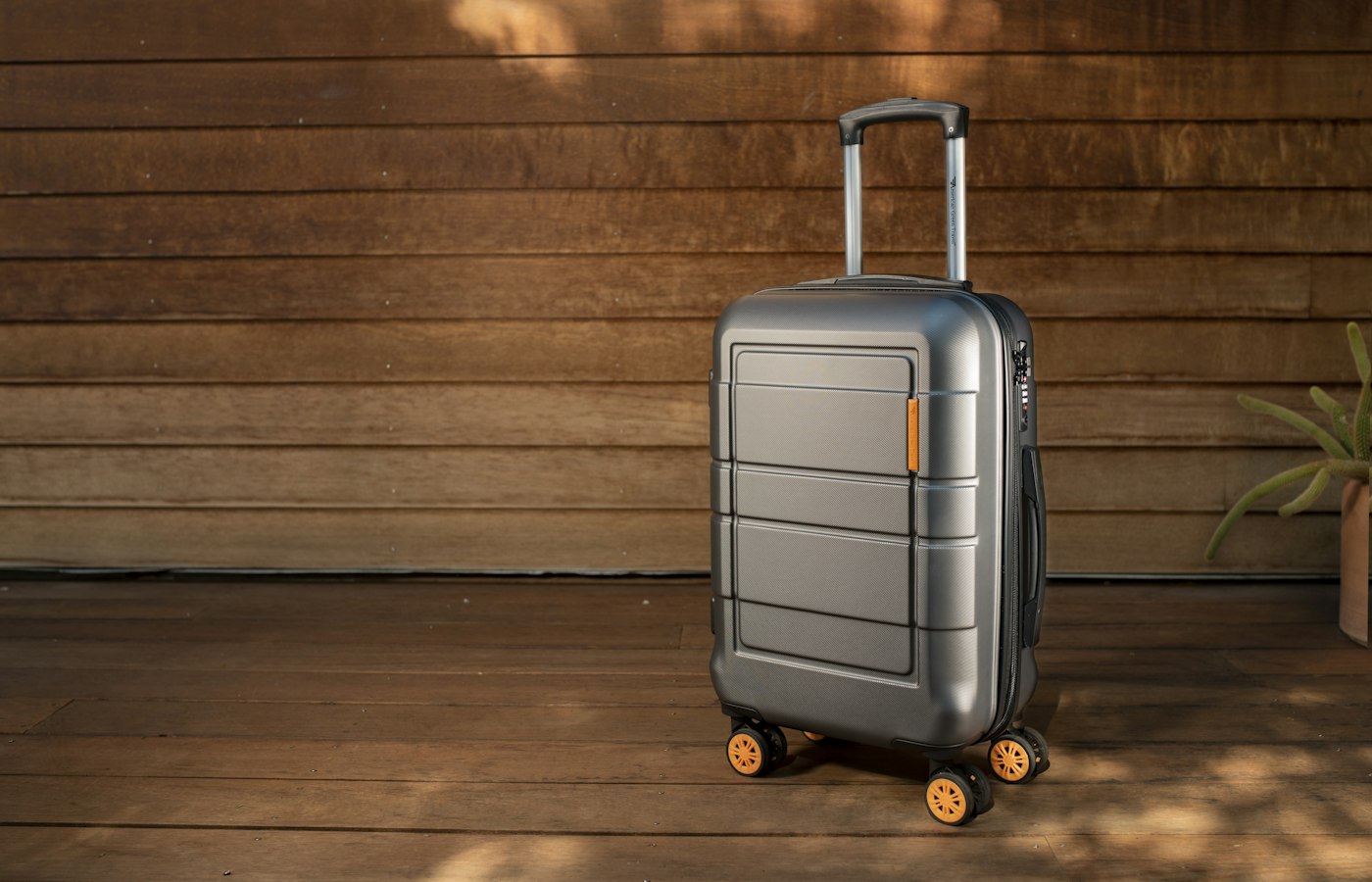
The number in a product name is not enough to establish cabin suitability. A nominal 22-inch case may describe its packing body, while its wheels and fixed handles extend farther. Measure the tallest, widest and deepest points of the packed bag with the telescopic handle retracted. Include bulging pockets and any expansion section you intend to use. The relevant shape is the one presented at the airport, rather than the empty case photographed in a catalogue.
American Airlines currently publishes a carry-on limit of 22 × 14 × 9 inches, including handles and wheels. That is an example of one airline’s published rule, not an international standard. IATA explains that baggage rules can differ by airline, cabin and aircraft. Check the operating carrier for each leg, including a connecting flight operated by a partner. Save the relevant rules with the itinerary and recheck them before travelling.
| Measurement | What to record | Why it changes the comparison |
|---|---|---|
| Overall size | Packed height, width and depth, with fixed protrusions | Connects the physical bag with the airline limit |
| Expansion | Depth before and after opening the expansion zip | Added capacity may change cabin suitability |
| Empty weight | Case with supplied accessories you will carry | Shows how much allowance is used before packing |
| Carry points | Top and side handles with the case packed | Reveals how you will lift it onto racks or stairs |
Turn empty weight into a packing budget
A lighter empty case leaves more room within a weight allowance, but compare the amount saved with your real packing needs. As an illustrative calculation, an 8 kg cabin-bag allowance leaves 5.5 kg for belongings when the case weighs 2.5 kg. A 3.3 kg case leaves 4.7 kg. The difference is 0.8 kg, which could decide whether a particular packing list fits, even though both bags look similarly sized. This example is not an allowance promised by any airline.
Find out whether the airline weighs the cabin bag alone or combines it with a personal item. Weigh the laptop, charger, toiletries and clothes you actually carry. A suitcase that appears to offer more internal space has little practical advantage if you reach the weight limit before using that space. On a less restrictive itinerary, you may reasonably accept a heavier case in exchange for handling features that you prefer.
Choose wheels for the surfaces between flights
Compare a spinner and a two-wheel case as different handling arrangements. A spinner can be pushed alongside you on a level floor, while a two-wheel case is normally tilted and pulled. Those differences are easy to notice in a showroom, but your route may also include paving joints, kerbs, steep ramps and train platforms. Ask permission to roll a packed demonstration case over representative surfaces where possible. An empty case will not reproduce the same steering or lifting effort.
Extend the handle through its available positions and check whether you can walk naturally without kicking the case. Turn through a narrow gap, stop on a gentle slope and lift it using both top and side handles. Examine wheel housings and ask how a damaged wheel would be identified for replacement. Wheel count alone cannot establish bearing quality, resistance to impact or long-term reliability. Keep observations from your own check separate from claims supported only by product descriptions.
Compare packing access and construction together
A hard-sided clamshell case divides packing across two halves and needs space to open. A soft-sided case may offer a front pocket or an arrangement that is easier to reach while upright. Neither construction automatically suits every trip. Place the open case on a bed-sized or rack-sized surface and consider where it will be used. A deep main compartment can suit packing cubes, while two shallow halves can make separation more straightforward.
Check whether shoes, a jacket and the items you retrieve in transit have a practical place. A front laptop pocket also consumes depth and may change how the case balances when full. Close the case without leaning on it or forcing the zip. Examine the lining, attachment points and protection around the handle mechanism. Material labels are useful facts, but they do not replace inspection of the complete case and the arrangement of its moving parts.
Establish the repair route for the exact model
A support comparison should identify what happens after a wheel, handle or zip needs attention. Travelpro publishes repair videos for common parts, while Samsonite describes an authorised-centre evaluation process. These are different starting points for obtaining help, not proof that a particular repair will be available everywhere. Keep the model or style number, receipt and applicable regional warranty. Ask which parts can be ordered, who can install them and how the case reaches the service provider.
Read the coverage that applies to the purchased collection. Samsonite’s published repair policy distinguishes manufacturing defects from carrier damage and normal wear, and explains the role of its authorised repair centre. A warranty headline should therefore be read alongside the cause of damage, evaluation steps and possible transport costs. For frequent travel, ask about an out-of-warranty repair as well: a repairable wheel with a clear parts reference may be more useful than a broad promise without a practical service route.
Make the final choice with a packed comparison
Use the same belongings in each finalist and write a short decision record. A traveller with narrow cabin limits might prioritise overall size and empty weight. Someone who spends more time on trains may give more attention to lifting handles and handling on rough platforms. A person carrying equipment may favour accessible organisation. These priorities should explain the choice more clearly than an unexplained overall score.
Before keeping the case, complete the checks allowed by the seller’s return policy: measure it packed, weigh the complete load, open it in the space available at your accommodation and lift it to a comfortable height. Confirm that its intended configuration matches the relevant baggage rules. The strongest carry-on is the one whose size, packing arrangement and service route continue to make sense after you leave the shop.
| Your main constraint | Prioritise | Keep in the final record |
|---|---|---|
| Tight cabin limit | Overall packed dimensions and empty weight | Operating-airline rules and your measurements |
| Frequent station changes | Handles, rolling control and loaded balance | Observations with a representative packed load |
| Equipment-heavy travel | Accessible organisation and weight budget | Complete equipment list and packed weight |
| Long ownership period | Parts identification and regional repair access | Model number, receipt and service instructions |
What to take into your shortlist
Compare a carry-on by its packed dimensions, useful weight allowance, handling and repair route, then match the case to the flights you actually take.
- Compare overall packed dimensions, including wheels and handles, with every operating airline on the itinerary.
- Calculate the weight left for belongings after subtracting the empty case and anything counted in the same allowance.
- Compare wheel handling and model-specific repair arrangements alongside shell material and purchase price.